


Understanding Cloud Infrastructure for Developers
Cloud infrastructure refers to the on-demand compute, storage, networking, databases, and management services used to build, deploy, and run applications over the internet. For developers, it replaces the need to buy and maintain physical servers, making it easier to launch projects quickly, test features, and scale environments as traffic grows. This is a core reason the best cloud infrastructure for developers is now central to modern software delivery.
Most cloud platforms for developers provide a mix of virtual machines, containers, managed databases, object storage, load balancers, and security controls through a web console, command line tools, or APIs. That matters because development teams need repeatable environments, fast provisioning, and clean integration with CI/CD pipelines, version control, and monitoring tools. In practical terms, cloud services for app development help teams move from idea to deployment with less operational overhead.
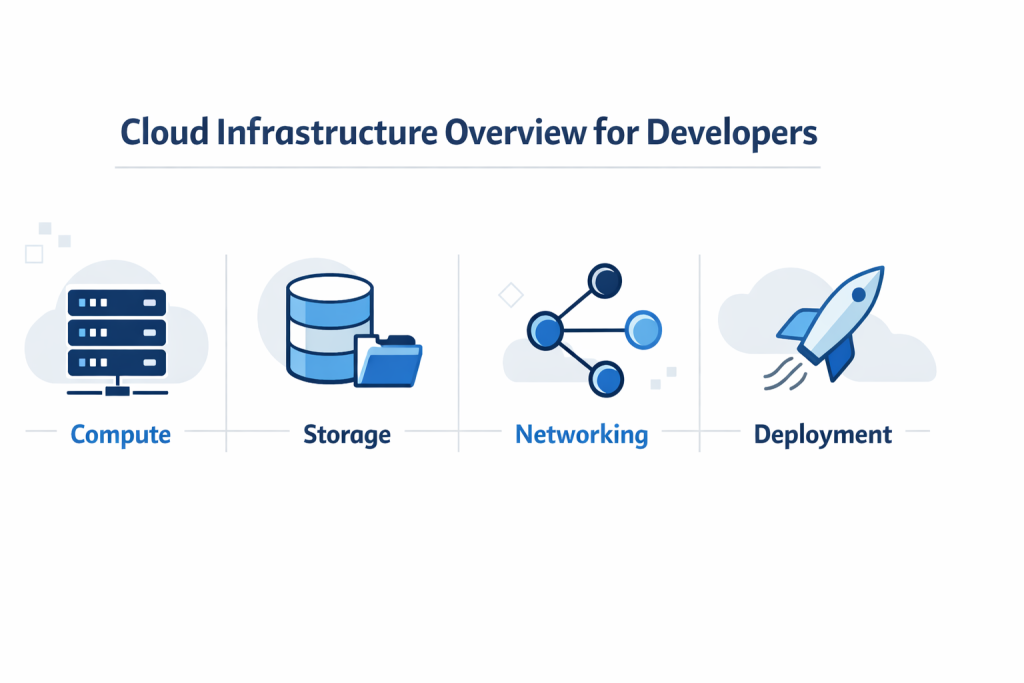
What is Cloud Infrastructure?
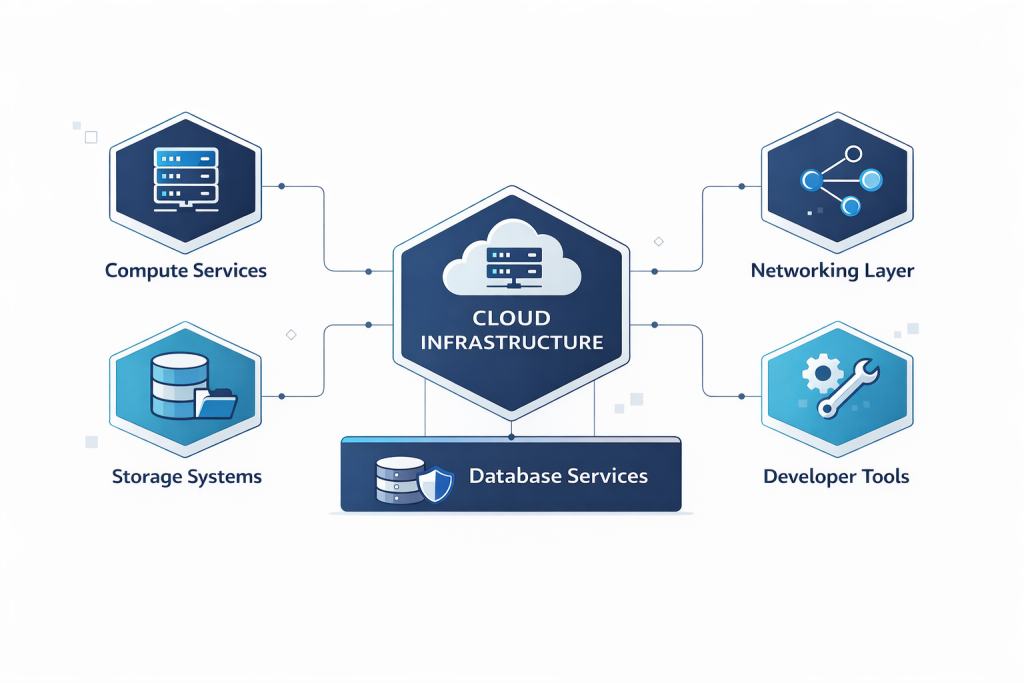
At a technical level, cloud infrastructure is made up of several building blocks that work together to host applications reliably. Compute runs your code, storage keeps files and databases available, and networking connects services securely across regions and users. Many developer-friendly cloud services also include identity management, observability, auto scaling, and backup systems.
- Compute: virtual machines, containers, serverless functions, and GPU instances
- Storage: block storage, object storage, file systems, and backups
- Networking: virtual private clouds, firewalls, DNS, CDN, and load balancers
- Data services: managed SQL, NoSQL, caching, and analytics tools
- Developer tooling: APIs, SDKs, infrastructure as code, and CI/CD integrations
Importance of Scalable Cloud Platforms
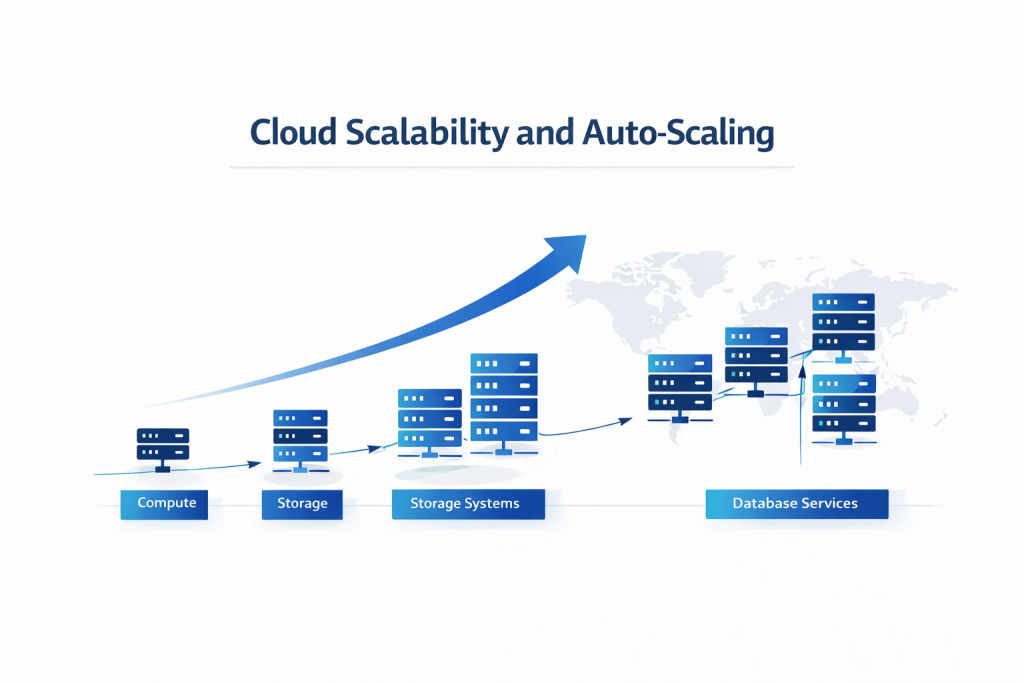
Scalable cloud infrastructure lets teams handle growth without rebuilding their entire stack. A startup may begin with a small app server and managed database, then add container orchestration, distributed caching, and multi-region traffic routing as usage increases. This flexibility makes scalable cloud platforms especially useful for SaaS products, eCommerce apps, mobile backends, and APIs that see unpredictable demand.
For EU-based teams, scalability also needs to work alongside compliance and data location requirements. If user data must stay in the EU for GDPR reasons, the best cloud providers for developers should offer regional hosting, encryption, access logging, and clear data processing terms. Good performance is not only about speed; it also includes resilience, failover options, and the ability to deploy close to users.
Key Benefits of Developer-Friendly Cloud Services
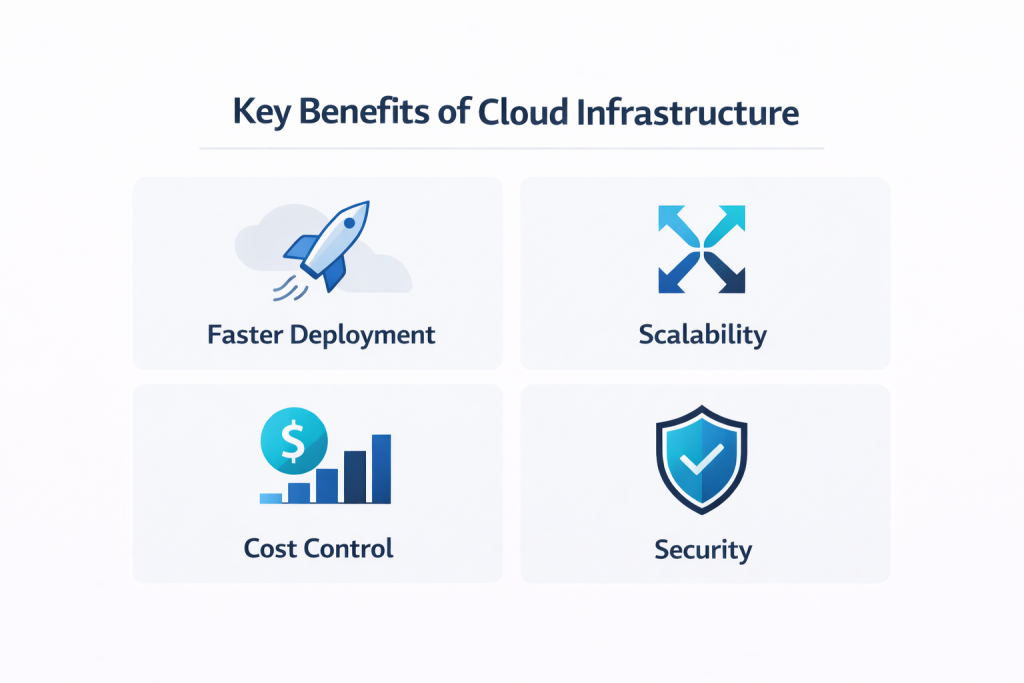
The strongest developer cloud hosting solutions reduce friction during development and operations. Instead of spending days configuring infrastructure manually, teams can use templates, APIs, managed runtimes, and automated deployment workflows. This improves release speed and lowers the risk of configuration errors.
- Faster deployment: launch environments in minutes instead of days
- Lower maintenance burden: use managed databases, Kubernetes, and backups
- Better collaboration: standardize environments across development, staging, and production
- Improved cost control: scale resources up or down based on actual demand
- Stronger security: apply IAM, encryption, private networking, and audit logs
- Global reach: deploy applications closer to users for better latency
| Cloud Component | Why Developers Need It | Typical Use Case |
|---|---|---|
| Compute | Runs applications, APIs, jobs, and services | Web apps, microservices, background workers |
| Storage | Keeps files, media, logs, and persistent data available | User uploads, backups, static assets |
| Networking | Controls connectivity, routing, and traffic distribution | Load balancing, private app access, CDN delivery |
| Managed databases | Reduces operational work and improves reliability | PostgreSQL, MySQL, Redis, MongoDB workloads |
| Developer tools | Speeds deployment and infrastructure management | CI/CD, Terraform, CLI, Git-based workflows |
Overview of Top Cloud Platforms for Developers
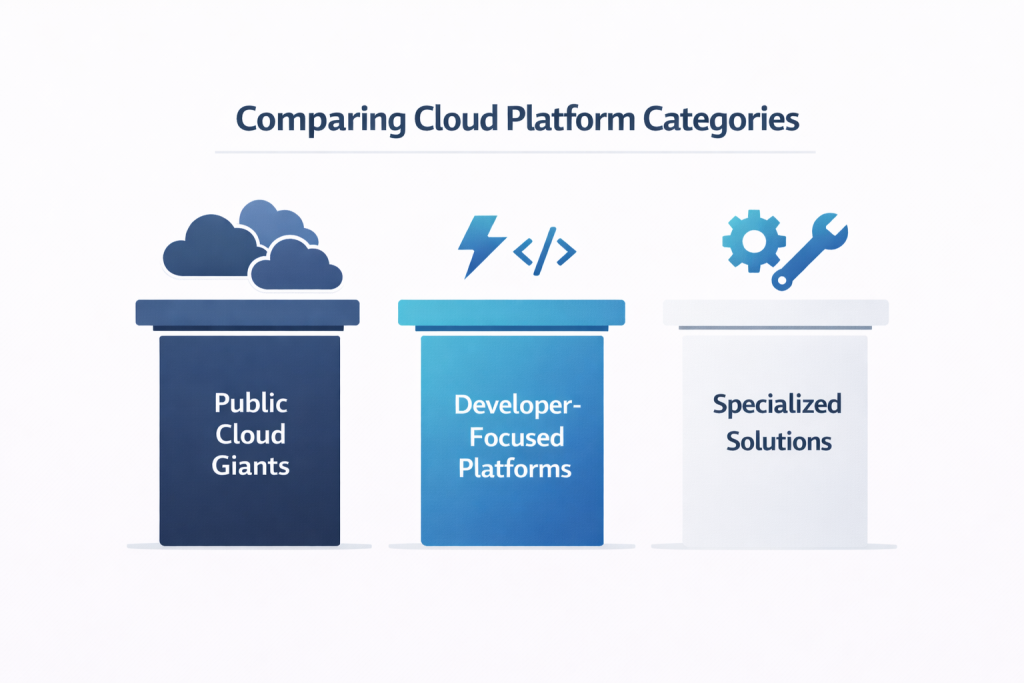
When comparing the best cloud infrastructure for developers, the right choice often depends on team size, application architecture, budget, and compliance needs. Some cloud platforms for developers are strongest in enterprise-scale services and global reach, while others focus on simplicity, predictable pricing, and quick deployment. Developers should look beyond brand recognition and match the platform to actual workload requirements.
In broad terms, public cloud providers such as AWS, Microsoft Azure, and Google Cloud offer the widest service catalogs and deep tooling for large-scale systems. Other developer-friendly cloud services, including DigitalOcean, Linode, Vultr, Hetzner, and Platform-as-a-Service providers, are often easier to adopt for smaller teams and independent developers. For European projects, regional infrastructure availability and GDPR-friendly hosting options can be a major factor.
Comparing Best Cloud Providers for Developers
The best cloud providers for developers differ in complexity, pricing style, and ecosystem maturity. AWS is often chosen for its breadth, Azure for Microsoft-based environments, and Google Cloud for data-heavy and container-focused projects. Simpler cloud hosting solutions for developers can be a better fit for teams that want faster onboarding without navigating hundreds of service options.
| Provider Type | Strengths | Best Fit |
|---|---|---|
| Large public cloud | Global regions, deep service portfolio, advanced security and enterprise support | Scaling SaaS, large teams, regulated workloads |
| Developer-focused IaaS | Simple setup, transparent pricing, fast provisioning | Startups, MVPs, small engineering teams |
| Managed app platforms | Easy deployment, built-in CI/CD, less infrastructure management | Web apps, internal tools, fast product releases |
| Private or hybrid cloud | More control over data, custom security, workload placement flexibility | Compliance-heavy or legacy-integrated systems |
Leading Cloud Hosting Solutions for Developers
Different infrastructure models serve different development goals. Public cloud is usually the first choice for speed and flexibility, private cloud supports stronger control and isolation, and hybrid cloud combines both when teams need to keep some systems on-premises while scaling others in the cloud. These app development cloud solutions can all work well when aligned with project needs.
- Public cloud: ideal for APIs, SaaS apps, test environments, and global web applications
- Private cloud: useful for industries with strict data handling or internal platform requirements
- Hybrid cloud: helpful when modern apps must connect to legacy systems or local databases
- Managed platforms: strong choice for teams that want to focus more on code than infrastructure
- Container platforms: best for microservices, portability, and automated scaling
Case Studies: Successful App Development Cloud Solutions
A startup launching a SaaS analytics tool may begin on a simple developer cloud hosting solution using managed PostgreSQL, object storage, and container deployment. As customer traffic grows, the team can add auto scaling, CDN delivery, queue-based workers, and observability tools without replatforming. This is a common path for teams seeking scalable cloud infrastructure with controlled costs early on.
A second example is an EU-based health or fintech application that must balance performance with GDPR obligations. In that case, the team may choose a provider with EU data centers, encryption by default, role-based access controls, and audit logging. If the product also serves users outside Europe, a hybrid or multi-region setup can improve latency while keeping sensitive data in approved regions.
Choosing the Right Developer Cloud Hosting Solutions
Choosing among cloud hosting solutions for developers should start with the workload, not the marketing. A simple content app, a real-time mobile backend, and a machine learning service all need different compute, storage, networking, and deployment models. The best decision usually comes from aligning technical requirements with budget, team expertise, and long-term growth plans.
It is also important to decide how much infrastructure your team wants to manage directly. Some teams prefer raw virtual machines and full control, while others want managed Kubernetes, serverless runtimes, or opinionated app platforms that reduce operational tasks. The best cloud infrastructure for developers is the one that supports fast shipping without creating unnecessary complexity.
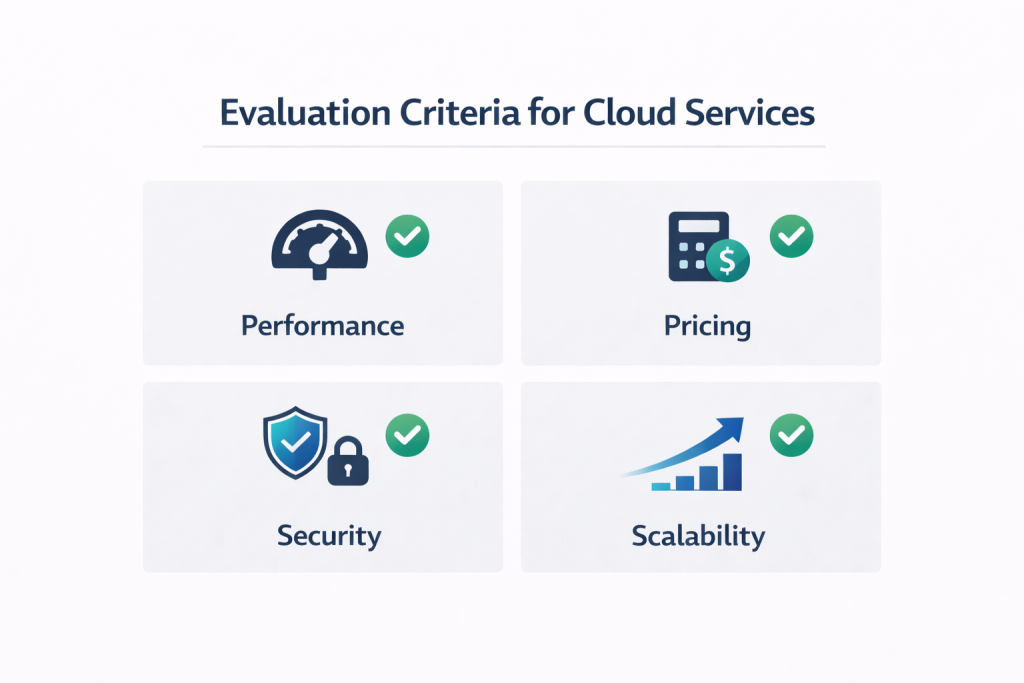
Factors to Consider: Performance, Pricing, and Support
Performance includes more than CPU speed. Developers should consider disk performance, network latency, scaling behavior, regional availability, and managed database reliability. For global applications, edge delivery and load balancing can affect user experience just as much as instance size.
Pricing should be reviewed carefully because cloud costs can rise fast as traffic, storage, and data transfer increase. Transparent billing, predictable plans, cost monitoring, and alerts are useful features, especially for startups and small teams. Strong support matters when incidents happen, so review documentation quality, SLA terms, and access to technical help.
- Performance: uptime, latency, autoscaling, storage IOPS, and region coverage
- Pricing: hourly vs monthly billing, bandwidth charges, managed service fees
- Support: response times, documentation, community resources, onboarding help
- Compliance: GDPR readiness, ISO certifications, logging, and data residency options
- Security: IAM, encryption, network controls, secret management, backups
How to Evaluate Cloud Services for App Development
A practical evaluation process helps avoid overcommitting to the wrong platform. Start by mapping your application needs: expected traffic, data sensitivity, deployment model, and integrations. Then test real workloads in a proof-of-concept environment rather than relying only on provider feature pages.
- Define your app architecture and expected growth over 12 to 24 months
- List required services such as databases, object storage, queues, and CDN
- Check regional coverage for target users, including EU hosting if needed
- Run performance tests for compute, networking, and database workloads
- Review pricing calculators and estimate storage and bandwidth usage
- Validate security controls, access management, and compliance documentation
- Test deployment workflows with your CI/CD and infrastructure as code tools
Tips for Selecting Scalable Cloud Infrastructure
Teams often make better cloud decisions when they leave room for growth without paying enterprise-level costs too early. Choose scalable cloud platforms that let you start small, then add managed services, replication, container orchestration, or multi-region delivery as needed. Portability also matters, especially if you want to avoid tight coupling to one provider’s proprietary stack.
- Prefer services with clear upgrade paths from small workloads to production scale
- Use managed databases and backups unless your team has strong ops capacity
- Adopt infrastructure as code for repeatable deployments and easier migration
- Track bandwidth and storage costs from the start to avoid billing surprises
- Prioritize providers with EU regions if GDPR or local data handling applies
- Test disaster recovery and backup restore processes before launch
Advanced Insights on Maximizing Cloud Infrastructure
Once a platform is in place, the next challenge is making it efficient, reliable, and easy to operate. The most effective cloud services for app development are not just powerful; they are also well-optimized for deployment speed, observability, and cost control. This is where engineering discipline has a direct effect on both application performance and infrastructure spend.
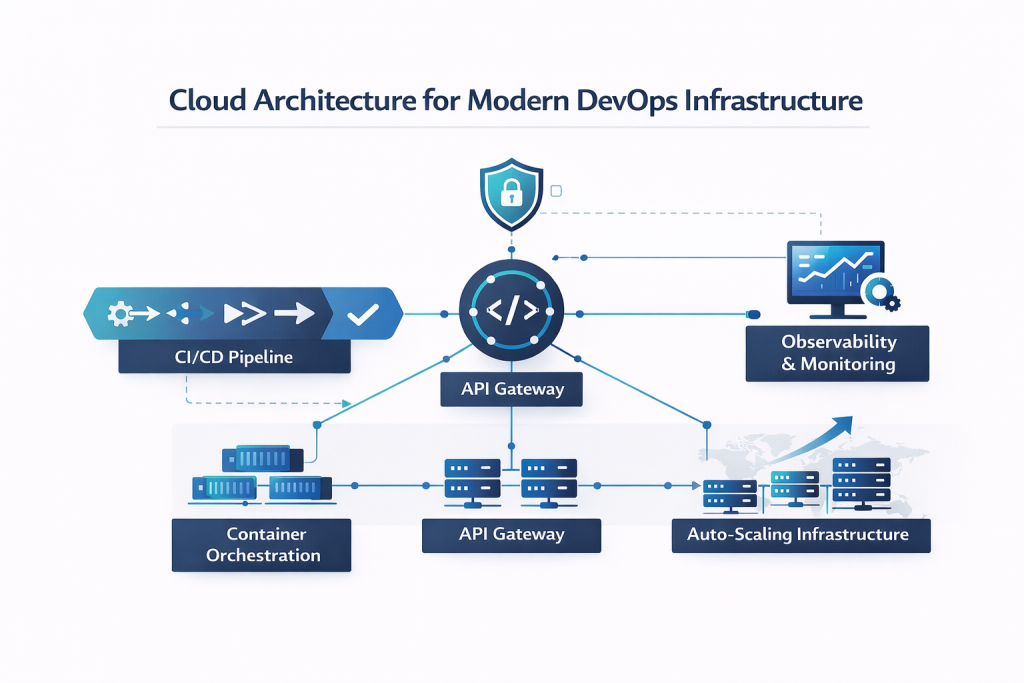
Modern teams maximize cloud infrastructure by combining automated provisioning, monitoring, and performance tuning with clear architecture choices. Whether you use public, private, or hybrid app development cloud solutions, the goal is the same: deliver stable applications quickly while keeping operations manageable as demand grows.
Optimizing Cloud Platforms for Efficiency
Optimization starts with choosing the right service for each workload. Stateless applications often perform well in containers or serverless environments, while persistent services may need dedicated instances and tuned storage. Rightsizing resources, enabling auto scaling, and using caching layers can cut costs while improving user experience.
- Rightsize compute: avoid overprovisioned instances for steady-state workloads
- Use autoscaling: match capacity to actual traffic patterns
- Optimize storage: separate hot, warm, and archival data where possible
- Add caching: reduce database load with Redis, CDN, or edge caching
- Monitor continuously: track latency, errors, throughput, and cost trends
Integrating Developer Tools and APIs
The best developer-friendly cloud services fit naturally into existing workflows. That means support for Git-based deployments, CLI tools, SDKs, webhooks, Terraform or other infrastructure as code tools, and integrations with observability platforms. Strong APIs make it easier to automate repetitive tasks and maintain consistent environments across teams.
For example, a development team might use GitHub Actions for CI/CD, Terraform for provisioning, Docker for packaging, and managed Kubernetes for orchestration. This setup reduces manual changes and creates a more reliable path from development to production. Platforms referenced by sites such as Cloudoora are often evaluated through this lens: how well they support real deployment workflows, not just how many features they advertise.
Future Trends in Cloud Infrastructure for Developers
Cloud infrastructure is shifting toward higher automation, stronger security defaults, and more distributed application delivery. Developers are increasingly adopting serverless functions, platform engineering, internal developer portals, and AI-assisted operations to speed up releases. At the same time, sustainability and cost visibility are becoming more important in infrastructure planning.
Another clear trend is growth in sovereign and region-aware cloud deployment, especially for EU organizations. Teams want scalable cloud platforms that support performance and compliance at the same time, with better control over where data is stored and processed. In the years ahead, the best cloud providers for developers will likely stand out by combining ease of use, secure automation, and flexible global deployment options.
Conclusion
Finding the best cloud infrastructure for developers means balancing scalability, performance, compliance, and ease of deployment. The right choice depends on your application type, team resources, user geography, and how much infrastructure you want to manage directly. For many teams, the best path is a platform that starts simple, supports automation, and scales cleanly as the product grows.
Whether you choose public cloud, private cloud, hybrid architecture, or managed cloud hosting solutions for developers, focus on practical requirements first. Review compute, storage, networking, security, pricing, and developer tooling as one connected system rather than isolated features. When you do that, your cloud services for app development become a growth enabler instead of an operational bottleneck.
Frequently Asked Questions
What defines a developer-friendly cloud service?
A developer-friendly cloud service is easy to deploy, automate, and manage. It usually includes clear documentation, APIs, CLI tools, managed services, CI/CD integration, and pricing that is understandable without deep enterprise procurement experience.
How do I assess the scalability of a cloud platform?
Look at autoscaling support, regional availability, load balancing, database scaling options, and how well the platform handles spikes in traffic. A proof-of-concept test with realistic workloads is the most reliable way to confirm scalability.
What are the must-have features for cloud infrastructure in app development?
Key features include compute flexibility, reliable storage, secure networking, managed databases, monitoring, backup and recovery, identity and access management, and support for automation through APIs or infrastructure as code.
Which cloud model is best for most developers: public, private, or hybrid?
Public cloud is the best fit for most developers because it offers fast setup, flexible scaling, and broad service availability. Private and hybrid cloud are better suited to projects with strict compliance, legacy integration, or highly specific security requirements.
Why does GDPR matter when choosing cloud hosting solutions for developers?
GDPR affects how personal data is stored, processed, and transferred, especially for EU users. Developers should check whether a provider offers EU regions, clear data processing terms, encryption, access logging, and tools that support compliant data handling.
How can I control cloud costs as my application grows?
Use cost monitoring, rightsizing, autoscaling, managed services where appropriate, and storage lifecycle policies. It also helps to estimate bandwidth and database usage early, since those are common sources of unexpected cost increases.